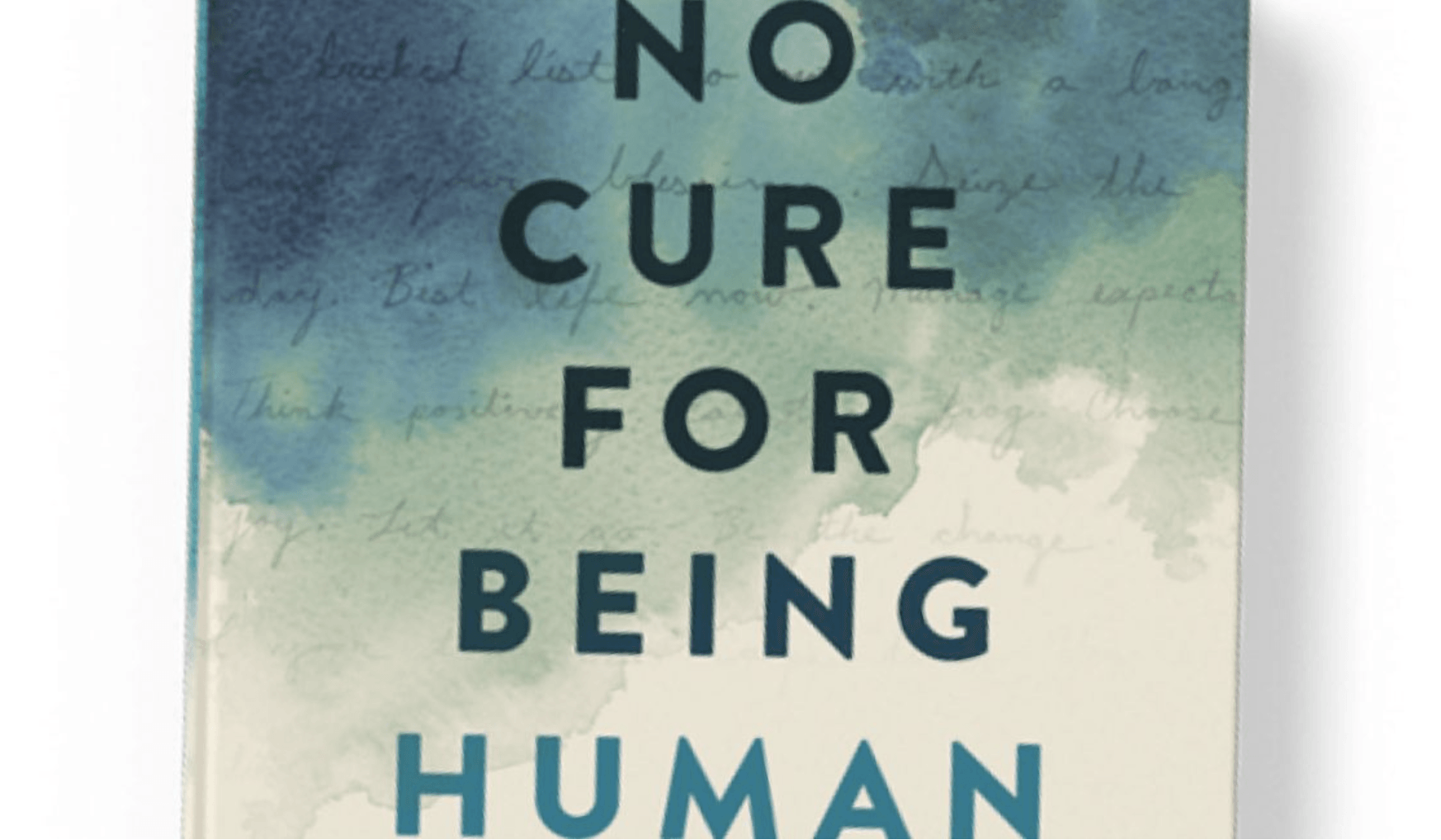
No Cure for Being Human
By Kate Bowler
Book Review by Beth Abernathy
Diagnosed with Stage 4 cancer at age 35, Kate Bowler sets a wonderful example for all of us on how to “be human” in her book, No Cure for Being Human. With her sharp wit and unfiltered honesty, Kate encourages us to re-examine our belief that the world is “sanitary, predictable and safe.”
Many of us believe that if we “seize the day, live in the present, and work on a bucket list” that we will have the life that society says we are owed. But for any of us who have experienced terrible loss or sickness, we realize that “so frequently the events that define us are the ones we didn’t choose.” Kate Bowler used to think that life was full of possibilities and if we only do the right things that utopia will result. In the second section of the book, Bowler examines how you move on with a life that you didn’t choose. Things often fall apart more often than we’d like to believe and she vividly describes what happens when those things we thought were within our control are no longer.
No Cure for Being Human encourages a more genuine, kinder and more honest way of living of our lives. Kate Bowler was a Duke Divinity School associate professor, a mother of a toddler, a wife and a highly respected author. After a devastating diagnosis, she is forced to live with uncertainty while still trying to maintain a sense of purpose, hope and connection. She takes the reader along with her as she suffers through the challenges of an experimental form of immunotherapy, medical insurance bureaucracies, and insensitive doctors. And yet through all of that, Bowler appreciates the friends and neighbors who chip in to help for her trips to Atlanta for medical treatment. Most importantly, we see Kate begin to appreciate that small moments can outshine the big events. As Kate writes, “I am probably replaceable, but here in the shadow of death, the mundane has begun to sparkle.”
This is the beauty of this book. Kate assures us, even as she grapples with her cancer diagnosis, her ambition, and her religion, that living our best lives means coming to terms with our humanity. Meaning that life is beautiful and terrible, full of hope and despair all at the same time. Bowler’s deep faith is evident throughout the book and yet the writing never feels overly religious. That being said, it is clear the important role that friends, family and faith play in her life. Bowler’s faith is one that doesn’t use pat answers to stop her from thinking or feeling, instead it allows her to explore and question what it means to be human.
No Cure for Being Human would be a great book for someone walking through a traumatic season or walking alongside a loved one, but it is also for each of us reflecting on life in general.
Share